
China has become an important sourcing destination for pharmaceutical ingredients, including Erythromycin. Its manufacturers and suppliers serve customers across research, healthcare, and regulated pharmaceutical production. However, supplier selection requires more than comparing prices or product names. Quality systems matter.
This guide introduces leading China-based Erythromycin manufacturers and suppliers through practical purchasing considerations. It examines manufacturing experience, production capacity, documentation, quality standards, and export support. Reliable companies should provide clear specifications, certificates of analysis, batch traceability, and consistent communication. Facilities may also demonstrate compliance with applicable Good Manufacturing Practice requirements and national regulations.
Details matter. A professional buyer may review impurity profiles, packaging conditions, storage instructions, and testing methods before placing an order. A clean production site is useful evidence, but it does not replace independent verification. Request samples. Check records carefully. Small gaps can become expensive problems.
The companies discussed here may differ in specialization, scale, and international experience. Some focus on bulk pharmaceutical ingredients, while others support formulation development or contract supply. Information can change, so readers should confirm current certifications, licenses, product availability, and export eligibility directly with each supplier. Public information is not always complete.
This overview aims to support informed decisions, not promote unverified claims. Supplier audits, laboratory testing, and qualified regulatory advice remain important, especially for pharmaceutical applications. The process can feel slower than expected. That caution is worthwhile. With careful due diligence, buyers can identify dependable Erythromycin partners and build a more transparent, resilient supply chain.
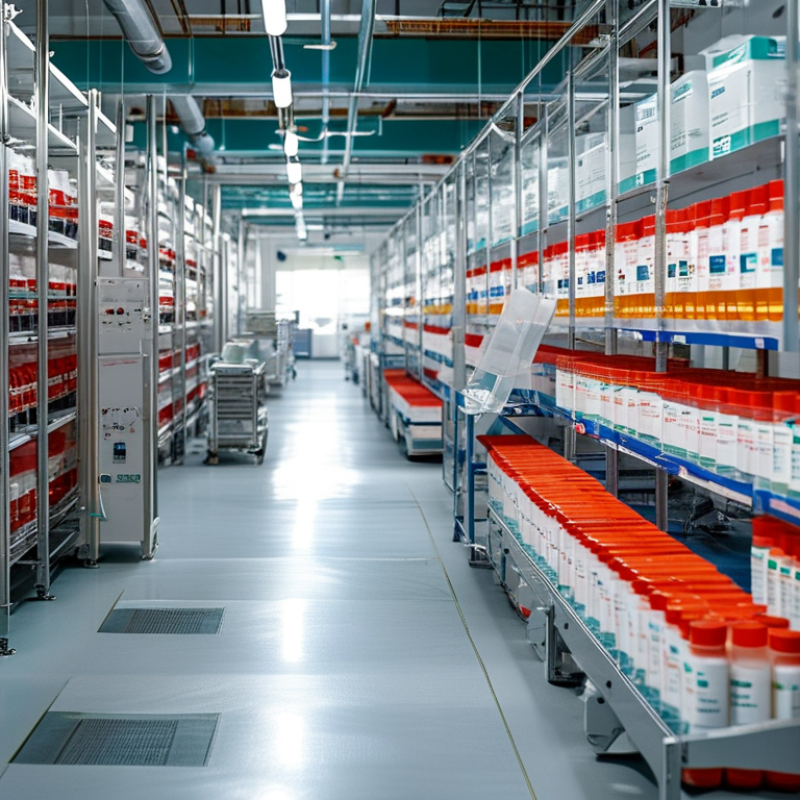
China Top Erythromycin Manufacturers and Suppliers
Erythromycin, identified by CAS 114-07-8, is a macrolide antibiotic used in regulated pharmaceutical production. Its molecular formula is C37H67NO13. The relative molecular mass is 733.93 g/mol. These details help purchasing teams confirm the correct material before testing or production.
Reliable suppliers should provide clear batch documentation. A practical review includes identity, assay, related substances, residual solvents, water content, and microbial quality. The certificate of analysis should match the delivered batch, not a generic sample. Packaging also matters. Light-resistant, sealed containers can help protect the powder during storage and transport. Storage conditions should follow the supplier’s validated guidance and applicable pharmacopeial requirements.
Tips: Ask for the CAS number, formula, molecular weight, specification, SDS, and recent COA. Confirm whether the material is erythromycin base or another salt. This distinction can affect molecular weight, solubility, and application suitability. Check GMP status and audit records where required. Do not rely on appearance alone. A white powder is not proof of identity or purity. Supplier descriptions may also contain small inconsistencies, so independent laboratory verification remains wise. One overlooked detail can affect an entire batch.-vesm
| Data Dimension | Reference Value | Technical Notes |
|---|---|---|
| Identity and Molecular Information | ||
| Substance name | Erythromycin | A macrolide antibiotic consisting of a 14-membered lactone ring with desosamine and cladinose sugar residues. |
| CAS Registry Number | 114-07-8 | Reference identifier for erythromycin base. |
| Molecular formula | C37H67NO13 | Formula of the anhydrous erythromycin base molecule. |
| Molecular weight | 733.93 g/mol | Relative molecular mass commonly reported for erythromycin base. |
| Chemical class | Macrolide antibiotic | More specifically, a 14-membered macrolide. |
| Pharmacological classification | Erythromycin antibacterial agent | The ATC code for systemic erythromycin is J01FA01. |
| Physical and Chemical Characteristics | ||
| Typical appearance | White or almost white crystalline powder | Actual appearance may vary slightly according to crystal form, moisture, and manufacturing process. |
| Odor | Practically odorless | Any unusual odor should be evaluated against the applicable specification. |
| Water solubility | Very slightly soluble to practically insoluble | Solubility depends on pH, temperature, particle size, solid form, and the specific erythromycin derivative or salt. |
| Solubility in organic solvents | Soluble in alcohols and acetone; limited in water | Reported solvent behavior can differ by test temperature and material form. |
| Acid sensitivity | Acid-labile | Erythromycin can undergo acid-catalyzed degradation; pH control is important during formulation and analysis. |
| Basicity | Weakly basic; pKa approximately 8.8 | The dimethylamino group of the desosamine moiety contributes to basic behavior; reported pKa values may vary with method and medium. |
| Melting behavior | Approximately 135–140 °C, with decomposition reported | The observed range can vary with polymorphism, hydration, purity, and heating conditions. |
| Quality and Analytical Parameters | ||
| Assay basis | Usually reported on an anhydrous or specified basis | The certificate of analysis should state the calculation basis and reference method. |
| Identity testing | HPLC retention time, IR spectroscopy, and/or mass spectrometry | The exact identity panel should follow the applicable pharmacopoeial or customer specification. |
| Purity testing | HPLC or LC-based related-substance method | Chromatographic methods are used to monitor erythromycin-related substances and degradation products. |
| Water or loss on drying | Specification-dependent | Limits must be confirmed for the declared solid form and the governing monograph or product specification. |
| Residual solvents | Controlled according to ICH Q3C or applicable local requirements | The solvent panel and limits depend on the manufacturing process. |
| Elemental impurities | Controlled according to ICH Q3D or applicable local requirements | Risk-based assessment and testing may be required for pharmaceutical-grade material. |
| Microbiological quality | Specification-dependent | Requirements vary by intended use, dosage form, and applicable pharmacopoeia. |
| Common Pharmaceutical Forms and Uses | ||
| Common active forms | Erythromycin base and erythromycin salts or esters | Examples include erythromycin ethylsuccinate, erythromycin stearate, and erythromycin lactobionate; these are distinct substances with different molecular weights and properties. |
| Dosage forms | Tablets, capsules, oral suspensions, topical preparations, and injections | Availability depends on the derivative, route of administration, and local regulatory approval. |
| Primary therapeutic use | Treatment of susceptible bacterial infections | Clinical use should be based on approved labeling, susceptibility data, and applicable medical guidance. |
| Mechanism of action | Inhibition of bacterial protein synthesis | Erythromycin binds to the 50S bacterial ribosomal subunit and generally acts as a bacteriostatic antibiotic, although activity can be concentration- and organism-dependent. |
| Purchasing and Supply Evaluation Dimensions | ||
| Material grade | Pharmaceutical grade, analytical grade, or research grade | The grade should match the intended application and be supported by appropriate documentation. |
| Required documentation | Certificate of analysis, specification, SDS, and batch traceability | For regulated applications, additional quality, regulatory, and change-control documents may be required. |
| Packaging considerations | Sealed, moisture-protective, light-protective packaging | Packaging should be compatible with the material and validated for transport and storage conditions. |
| Storage considerations | Store in a tightly closed container in a cool, dry, light-protected location | Follow the supplier’s validated storage conditions and the applicable product specification. |
| Shelf-life assessment | Based on stability data for the specific batch and packaging system | Do not infer shelf life solely from the CAS number or general reference data. |
| Key supplier comparison criteria | Identity, assay, impurity profile, documentation, batch consistency, and delivery capability | Price should be evaluated together with quality compliance, lead time, minimum order quantity, and technical support. |
Erythromycin is a regulated macrolide antibiotic used in pharmaceutical production. Its CAS number is 114-07-8. The formula is C37H67NO13, with a molecular weight of 733.93 g/mol. Check twice.
Request the SDS, current specification, recent COA, CAS number, formula, and molecular weight. The COA should match the delivered batch. It should include test methods, actual results, laboratory dates, and signatures. Generic paperwork is not enough.
Confirm whether the product is erythromycin base or a salt. Different forms can have different molecular weights and solubility. They may also suit different manufacturing applications. A naming mistake can affect the entire order.
Review assay, related substances, water content, residual solvents, and appearance. Microbiological results may also be required for certain applications. Ask for supporting chromatograms when critical tests need confirmation. Look for traceability.
Light-resistant, sealed containers can help protect the powder during transport and storage. Follow the supplier’s validated storage guidance and applicable quality requirements. Check the manufacturing date, retest date, and storage conditions before approval. A white powder proves little.
Review GMP status, audit records, validated procedures, and environmental monitoring. Ask about fermentation consistency, purification controls, deviation handling, and change-control records. Batch records should support clear traceability. Capacity alone is not proof.
Typical minimum order quantities may range from 1 to 25 kilograms. Lead times often range from 7 to 30 days after confirmation and payment. Custom packaging, testing, or export documents may extend delivery. A small MOQ can cost more.
Compare the supplier’s claims with batch documents, audit findings, shipment history, and independent laboratory results. Ask whether the MOQ covers one batch or several production lots. Record deviations, delays, test scope, and unclear COA entries. No supplier is perfect.
Erythromycin is a macrolide antibiotic identified by CAS 114-07-8, molecular formula C37H67NO13, and molecular weight 733.93. Under WHO ATC classification J01FA01, it is supplied in several pharmaceutical forms and used for appropriate bacterial infections under professional medical guidance. This article introduces its key quality attributes, manufacturing considerations, and the standards commonly applied to pharmaceutical-grade material.
China’s GMP-based supply chain includes API producers, intermediate manufacturers, quality-control laboratories, and export service providers. Buyers can compare suppliers by minimum order quantity, lead time, production batch size, packaging, and the completeness of COA test results. Effective due diligence should also review NMPA registration, DMF availability, USP or EP compliance, inspection history, data integrity, and audit readiness. A reliable supplier should demonstrate consistent batch performance, traceable documentation, validated processes, and transparent communication throughout qualification and procurement.
