[Drug name]
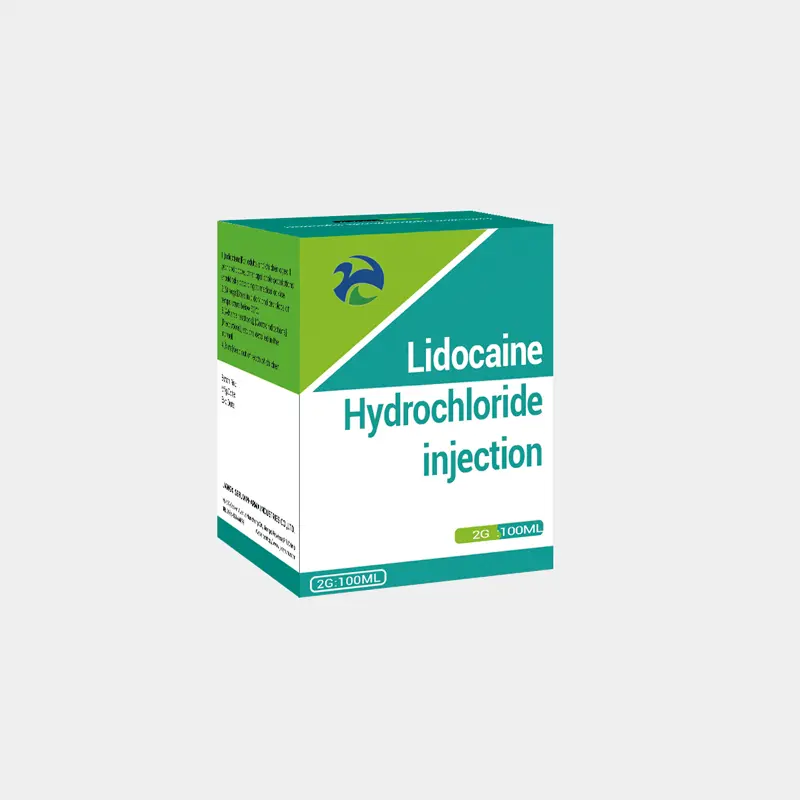
General name: Lidocaine Hydrochloride Injection
Trade name: Lidocaine Hydrochloride Injection
English name:Lidocaine Hydrochloride Injection
[Composition and traits]
Main ingredients: The main ingredient of this product is lidocaine hydrochloride.
Character: this product is colorless transparent liquid.
[indication]This product is suitable for infiltration anesthesia, epidural anesthesia, surface anesthesia (including mucosal anesthesia during thoracoscopy or abdominal surgery) and nerve block, can also be used for acute myocardial infarction ventricular premature beat and ventricular tachycardia, can also be used for digitalis poisoning, cardiac surgery and cardiac catheterization caused by ventricular arrhythmia. This product is usually ineffective for supraventricular arrhythmias.
[Specifications and Packaging]
Single-dose specification: 2G: 100ML
Packaging specification: 1 bottle
[usage and dosage]
1.Anesthesia with:
(1)adult dosage:
① the surface anesthesia: a 2% 4% solution is not more than 100 mg. The dose should not exceed 4.5mg/kg at one time.
②the sacral tube block used for labor analgesia: with a 1.0% solution, is limited to 200 mg.
③outside the catheter block: thoracic lumbar segment with 1.5% 2.0% solution, 250-300 mg.
④infiltration anesthesia or static note regional anesthesia: use 0.25% 0.5% solution, 50-300 mg.
(2)Children's usual dosage: varies with the individual, the total amount of one administration shall not exceed 4.0-4.5mg/kg, 0.25%-0.5% solution is commonly used, and 1.0% solution is used in special cases.
2.Anti-arrhythmic:
(1)intravenous injection: 1-1.5 mg/kg body weight (50-100 mg) is commonly used in for the first time load static note 2-3 minutes, repeat every 5 minutes when necessary intravenous 1 to 2 times, but the total amount must not exceed 300 mg of 1 hour.
(2) Intravenous infusion: Generally, 5% glucose injection is prepared into 1-4mg/ml drug drops or administered by infusion pump. After loading, it can continue to be maintained by intravenous drip at a rate of 1-4mg per minute, or by intravenous drip at a rate of 0.015-0.03mg/kg body weight per minute. The elderly, heart failure, cardiogenic shock, liver or kidney dysfunction should reduce the dosage, at 0.5 to 1mg per minute. It can be administered intravenously with 0.1% solution, not exceeding 100mg per hour.
[untoward effect]
Adverse reactions are common, most of which are related to dose and long time use.
1.Psycho-economic system: it is directly related to blood drug concentration, and can have dizziness, dizziness, fatigue, slurred speech, paresthesia, muscle tremor, convulsion, and consciousness disturbance.
2. The cardiovascular system: the large doses can produce severe sinus bradycardia, cardiac arrest, severe atrioventricular block and reduce myocardial contraction force, in case this should be stopped in time, when necessary, with atropine, isopropyl adrenaline or pacemaker therapy; When blood pressure drops, oxygen inhalation, acidosis correction and pressor drugs are given. Supraventricular tachycardia and torsional arrhythmia have also been reported.
3. Respiratory system: Respiratory arrest can be caused at extremely high blood concentrations. According to clinical observation, airway resistance was increased after 40mg dose of this aerosol for treating intractable cough. Spinal injection or topical use of this drug can cause fatal bronchospasm. Respiratory distress syndrome may occur in adults, but is rare. Toxic reactions occur when there are respiratory changes with respiratory muscle spasm.
4. Allergic reaction: few erythematous rash and angioneurotic edema and other manifestations and usually mild, severe cases can lead to respiratory arrest.
5. Immunotoxicity: It is reported that this drug can inhibit the random movement and phagocytosis of human white blood cells in vitro.
[taboo]
1.Allergic to local anesthetics should be prohibited.
2. Intravenous input is prohibited for patients with Ars-S syndrome (acute cardiogenic cerebral ischemia syndrome), pre-excitation syndrome, and severe heart block (including sinoatrial, atrioventricular, and intraventricular block).
3. Patients with uncontrolled epilepsy.
4. The severe liver function is not complete.
5. Have a malignant high fever.
6. Patients with Parkinson's diseases.
[matters need attention]
1. Prevent straying into blood vessels and pay attention to the diagnosis and treatment of local anesthetic poisoning symptoms. 2. The liver and kidney dysfunction, reduced liver blood flow, severe congestive heart failure, myocardial damage, such as low blood volume and shock patient with caution. 3. Allergic to other local anesthetics, this product may also allergy, but lidocaine and procainamide, queenie between no cross reactions of statins reported. 4. Its in vivo metabolism is procaine slow, have a cumulative effect, and always happened can cause poisoning.
[condition of storage]
Keep sealed below 25℃.
[term of validity]
24 Months